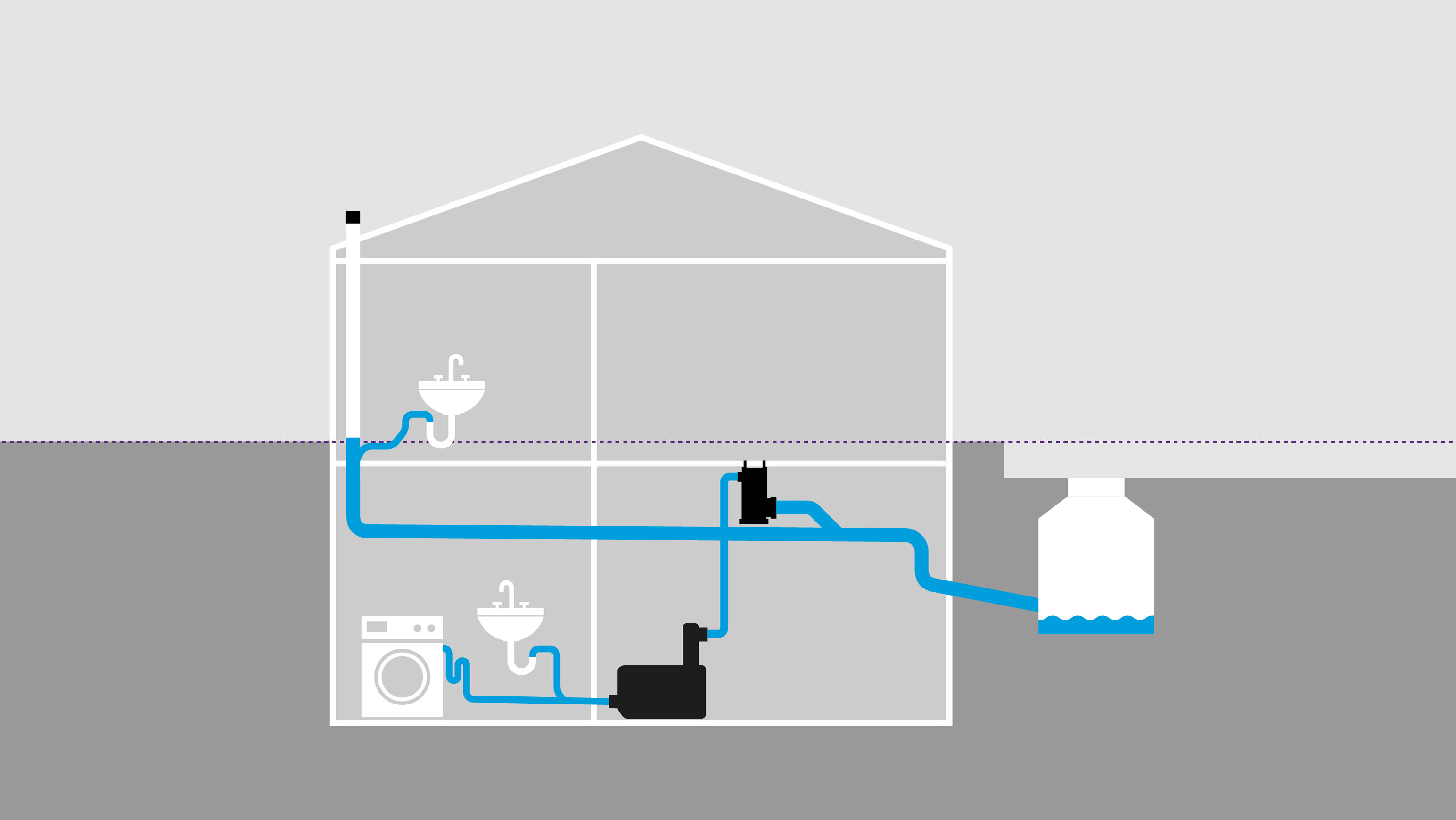
Installed correctly: The challenge of the lifting station
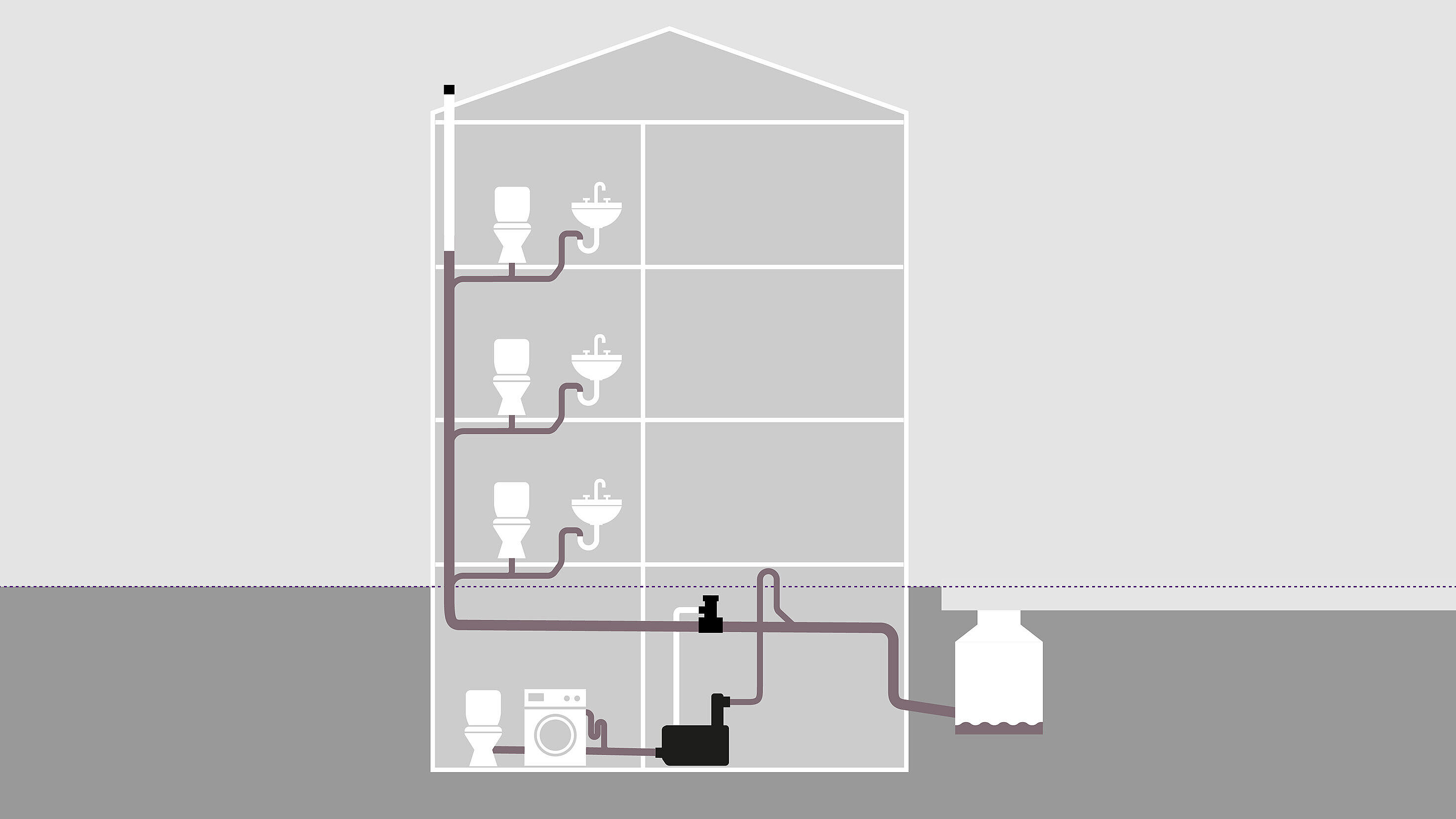
Key components in the installation of a wastewater lifting station are the so-called backwater loop, which protects against water ingress from the sewer, and a ventilation pipe for aeration and ventilation of the lifting station.
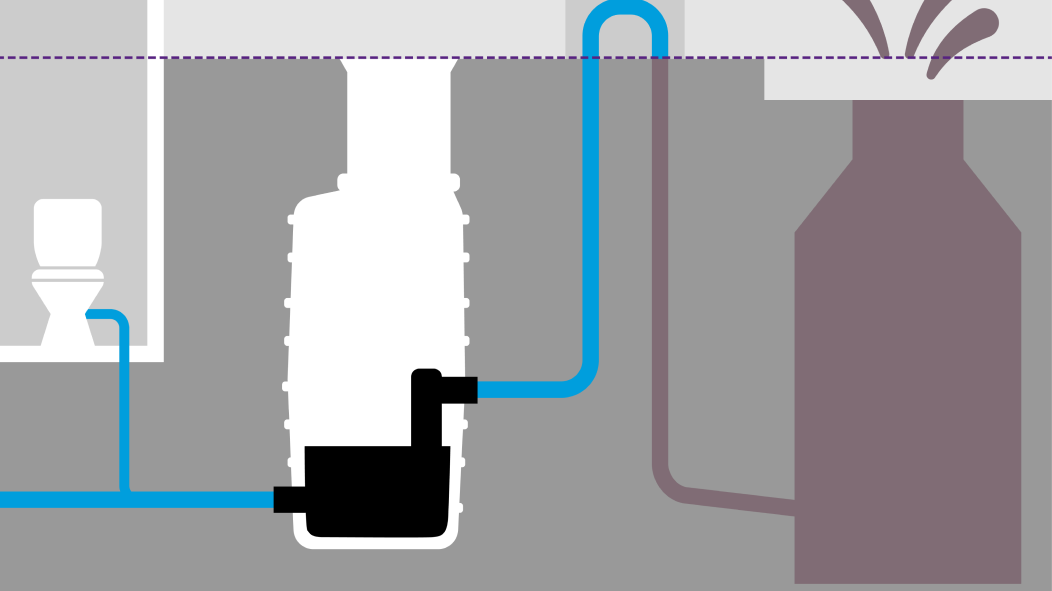
According to DIN EN 12056-4, the backwater loop is the section of the pressure pipe that extends above the backwater level. Based on the principle of communicating vessels, provided the pipe is correctly sloped, this prevents wastewater from entering the building even in the event of backwater from the sewer.
The correct version of a backwater loop is of crucial importance in ensuring reliable protection against backwater. Aeration and ventilation in accordance with DIN EN 12056-4 are also of crucial importance in preventing operational faults in the lifting station or odour problems.
An overview of the issue
In practice, backwater loops and ventilation pipes pose problems for planners and fitters in new-build projects and, above all, in refurbishment works:
- Encountering an existing building situation that makes the installation of a backwater loop or ventilation pipe difficult or impossible (e.g. due to ownership issues, structural constraints, acoustics, structural engineering, heritage protection or fire safety)
- High construction costs for ceiling penetrations and risers, as well as fire and sound insulation measures
- Loss of floor space
- Difficulties in precisely determining the effective backwater level
- Risk of inadequate property protection if the backwater loop is not installed above the backwater level
The solution
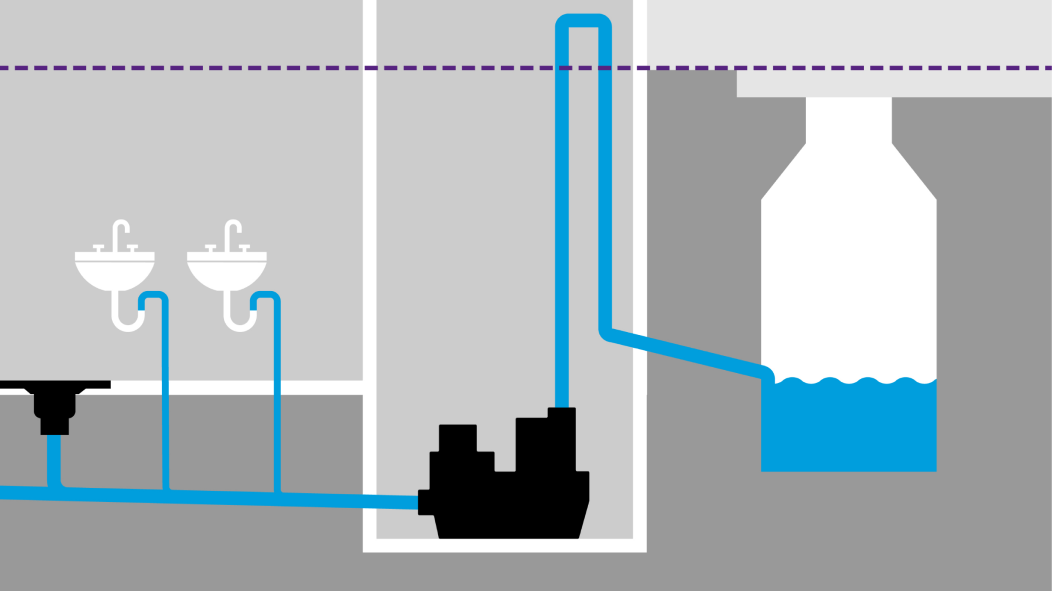
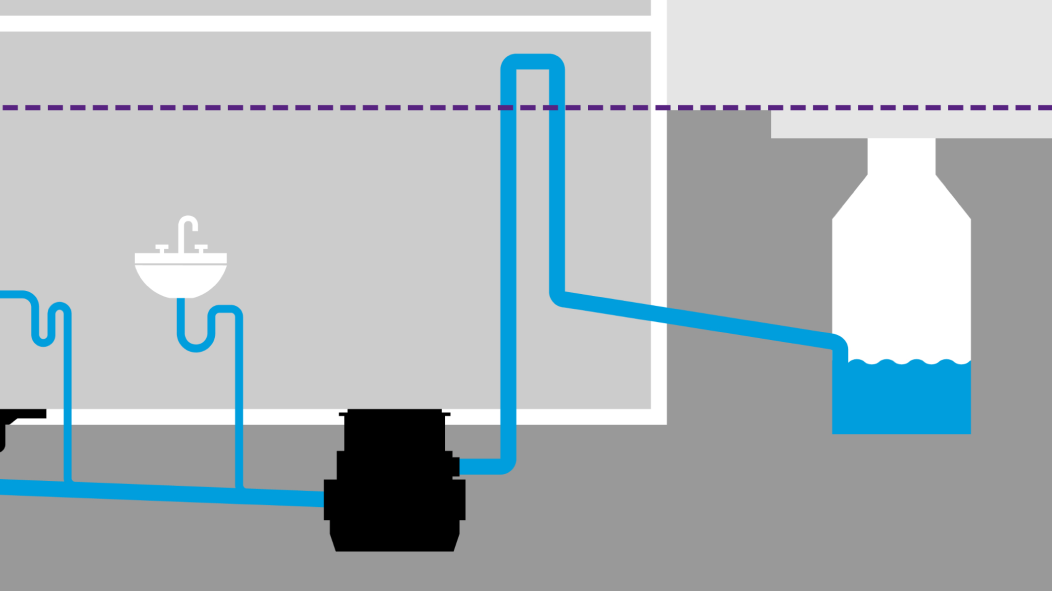
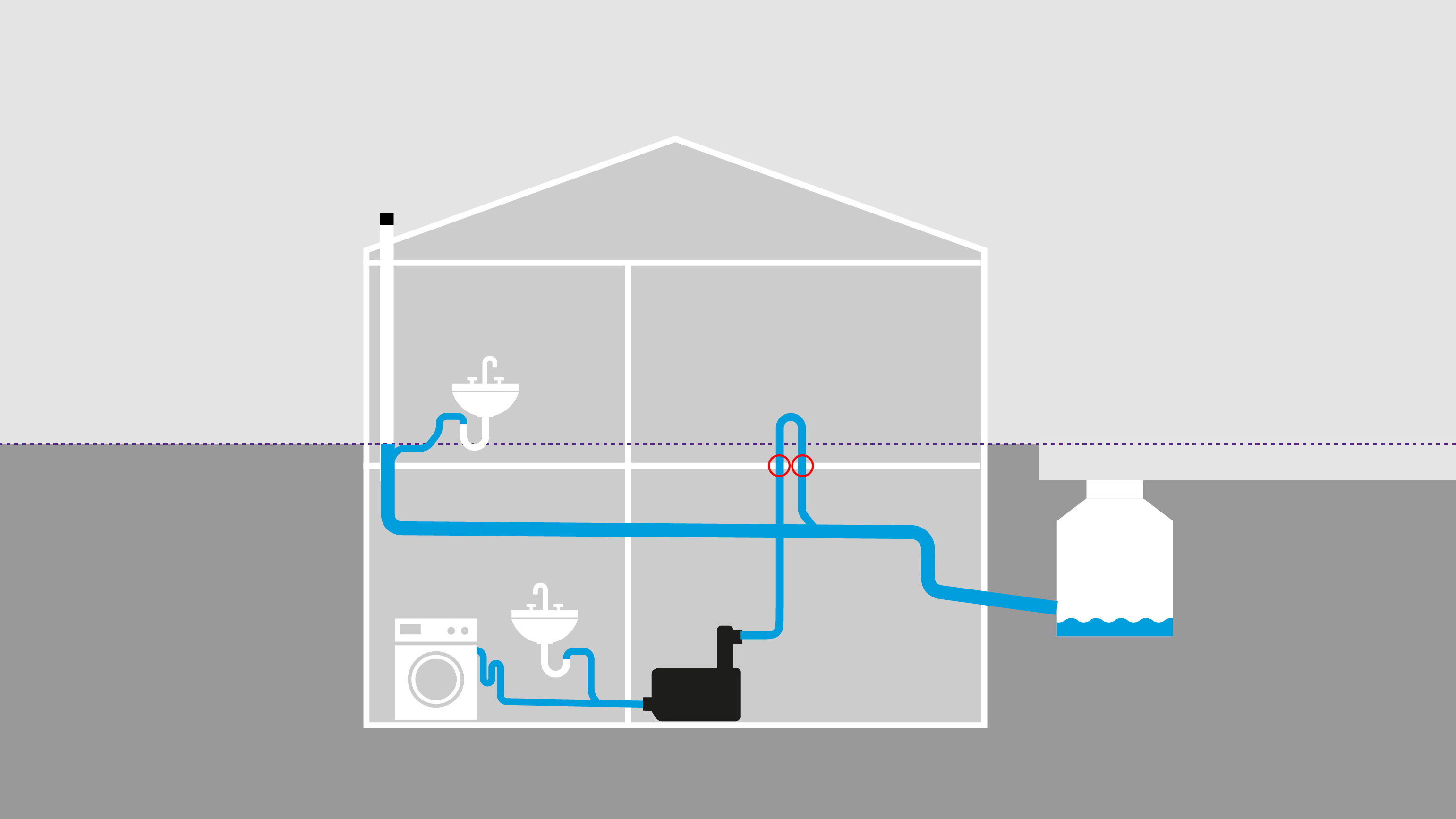
Until now, installing a greywater lifting station with a backwater loop in a detached house in accordance with the relevant standard required a ceiling opening in the living area (Situation 1). The system isolator can be installed below the backwater level (Situation 2). This means that the property is protected against backwater even without a backwater loop – without losing any living space at all. At the same time, this solution is up to 50 per cent cheaper than a conventional ceiling cut-out.
The operating principle
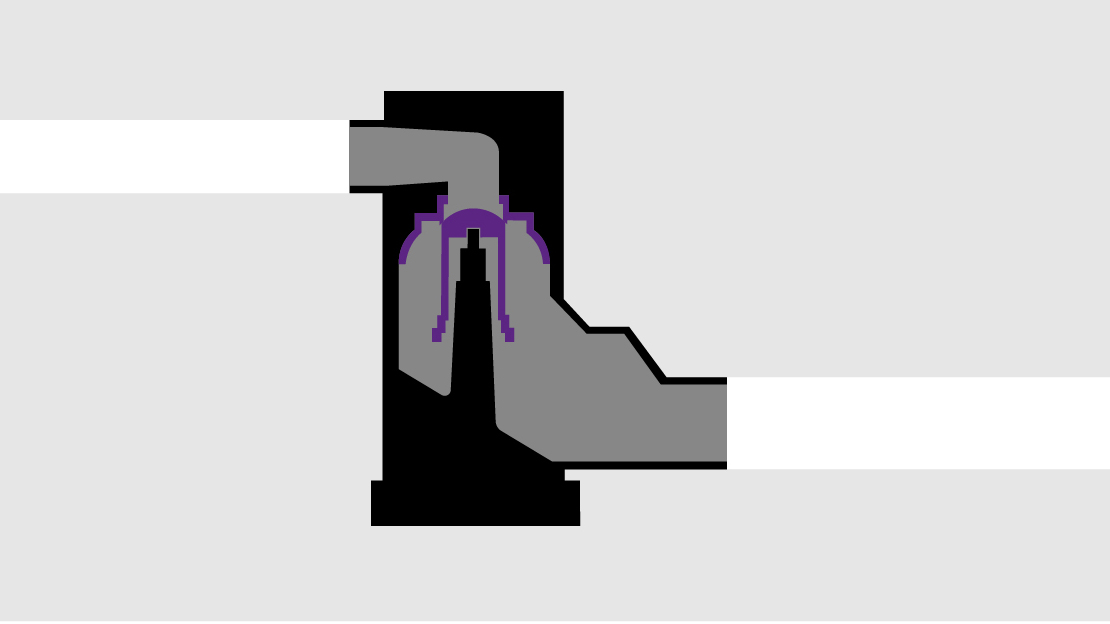
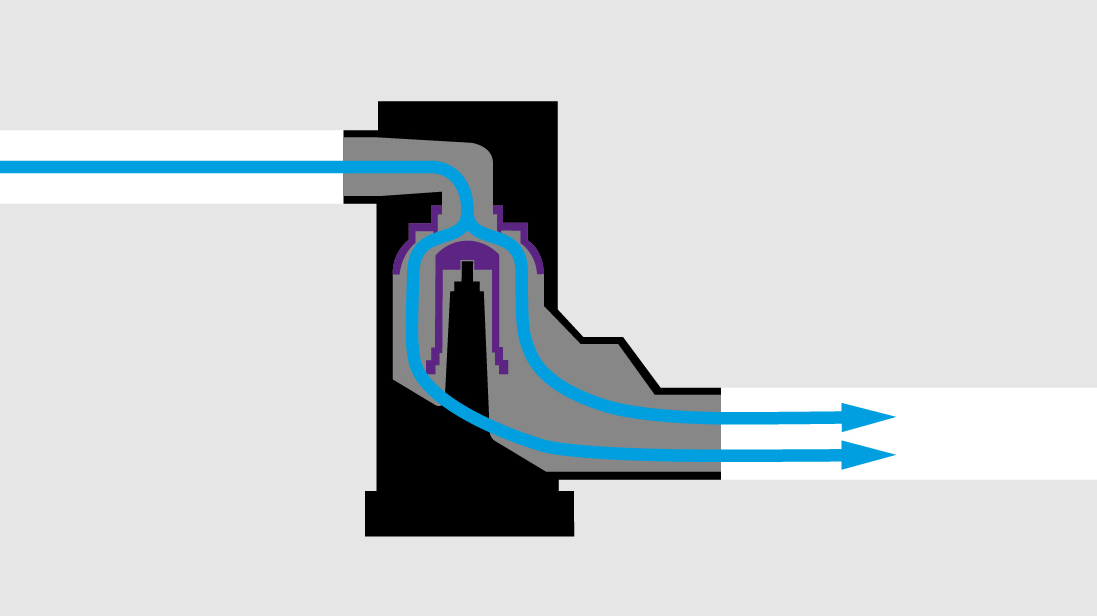
The CleverLoop system isolator for the pressure pipe of lifting stations features a mechanical shut-off mechanism that opens only when the pump is running and then closes automatically. It thus offers maximum protection against unwanted backflow – without the need for additional power or complicated technology. The system isolator can be easily adapted to various pressure pipe connections (e.g. DN 50, 80 or 100) below the backwater level in gravity drainage systems with socket and spigot dimensions (DN 90 to DN 200).
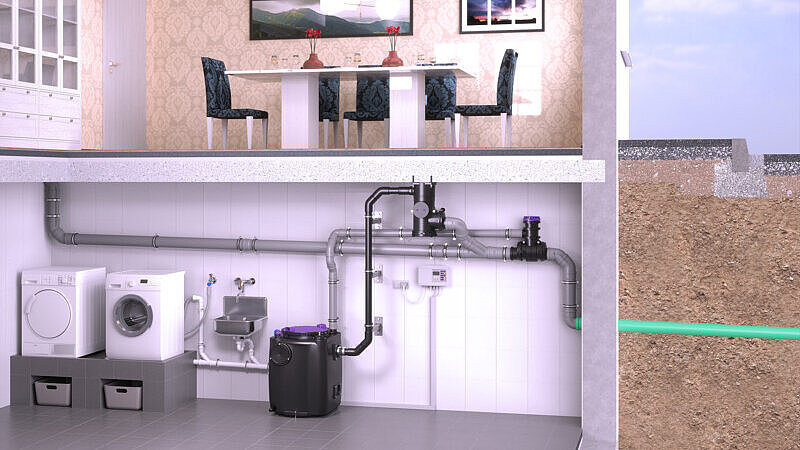
If a lifting station is retrofitted and the cellar ceiling is below the backwater level, the System isolator can prevent the need for a complex ceiling cut-through.
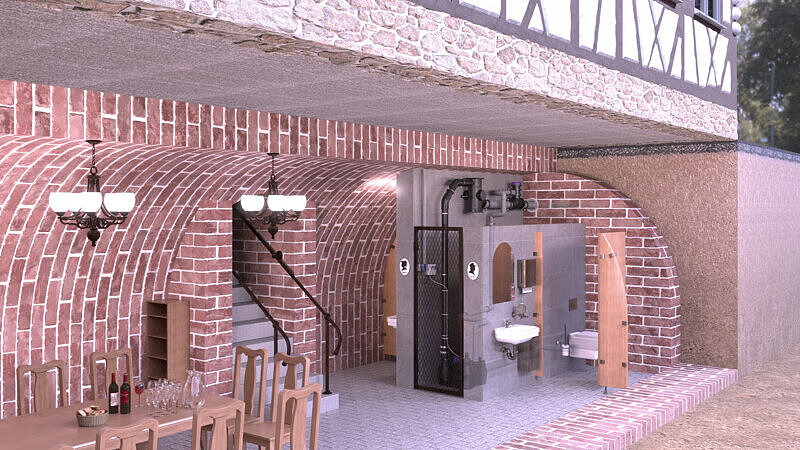
In the case of historic or listed buildings, cutting through a ceiling is usually neither desirable nor permitted. With a CleverLoop system isolator and a CleverVent ventilation valve, it isn’t even necessary in the first place.
Installation examples for planners
If the sewer is situated higher than the drainage point, the waste water usually has to be conveyed to the sewer via a backwater loop. This often involves additional effort and requires more space.
The CleverLoop system isolator offers an innovative alternative to this. Thanks to its novel design, the wastewater no longer needs to be raised above the backwater level. At the same time, the internal mechanism provides reliable protection against backwater. CleverLoop thus enables a cost-effective, clean and quick installation in both new builds and refurbishment projects.
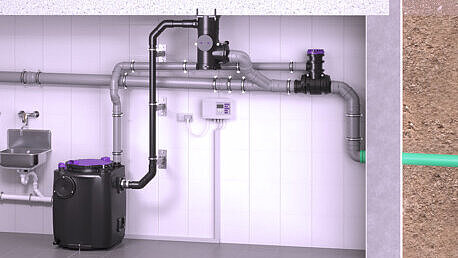
Suitable installation location
The system isolator must be connected to the ventilated main and manifold pipes, which must be sized in accordance with EN 12056-2. The lifting station must be sized such that the flow velocity in the pressure pipe is maintained between a minimum of 0.7 m/s and a maximum of 2.3 m/s.
The system is intended exclusively for installation in exposed pipework. It is mounted on the ceiling, which must be capable of safely supporting the weight and the forces exerted and must be checked in advance for load-bearing capacity.
Space requirements
The CleverLoop system isolator requires significantly less space than a conventional backwater loop, as there is no need for the bulky risers that extend up to the ceiling.
It should be noted, however, that one of the maintenance access points on the CleverLoop system isolator must always remain accessible. Furthermore, there must be at least 400 mm of clear access space beneath the CleverLoop for major maintenance, which takes place after 100,000 switching cycles or after a maximum of 5 years.
Sound insulation
As the CleverLoop system isolator is fitted directly to the ceiling and the wastewater flow from the lifting station passes through it, the transmission of vibrations and operating noise as structure-borne sound to the masonry must be prevented.
The fixing and sound insulation kit contains sound-absorbing wall plugs, special hanger bolts, as well as so-called sound-insulating nipples and washers. These components provide a mechanical decoupling of the unit from the wall, ensuring that vibrations from the pump or from the opening and closing of the internal valve are not transmitted into the building as a disturbing hum.

TÜV-certified safety
New product developments are expanding on established construction methods. The CleverLoop system isolator and the CleverVent ventilation valve ensure that the requirements for backflow prevention and ventilation set out in EN 12056, DIN 1986-100 or ÖNORM B 2501 are reliably met.
The CleverLoop system isolator and the CleverVent ventilation valve have been extensively tested and positively assessed by recognised research institutions such as Esslingen University of Applied Sciences, Steinfurt University of Applied Sciences and the Technical University of Berlin.
Extensive type testing carried out by TÜV Rheinland has demonstrated the products’ practical suitability and safety. The structural approval from the Austrian Institute for Building Technology (OIB) documents the suitability and applicability of both products, which also bear the Swiss Qplus Swiss Quality seal of approval. Furthermore, compliance with DIN SPEC 3615 confirms the quality and safety of the products.
This evidence from external experts, combined with the manufacturer’s declaration from KESSEL SE + Co. KG, thus confirms the verified safety of CleverLoop and CleverVent.