Simple yet effective: components of a sediment separator
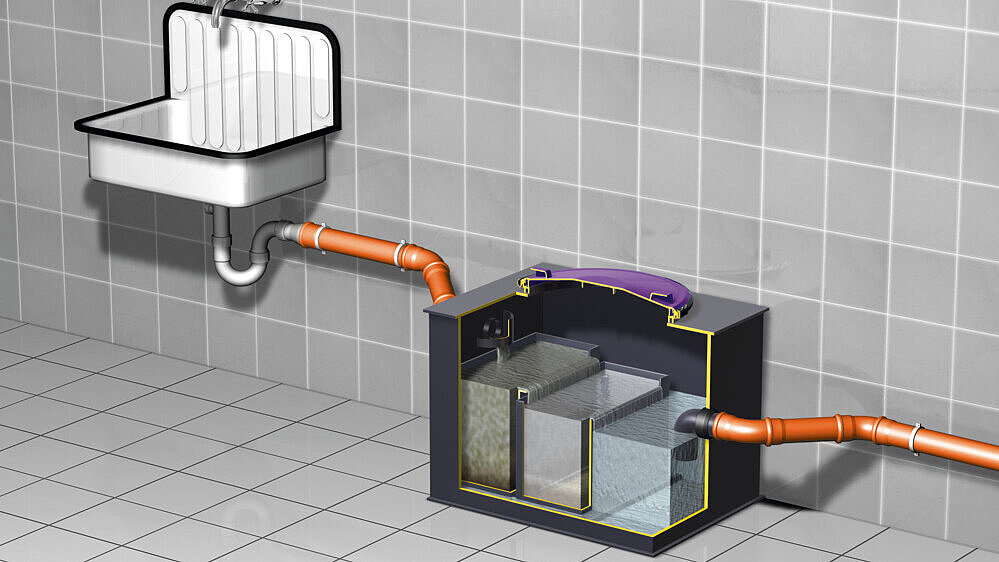
A sediment separator separates wastewater contaminated with soil, sand and/or sludge from the sediments it contains. Essentially, it is a large-capacity tank, the interior of which may be divided into several chambers.
What happens inside a sediment separator?
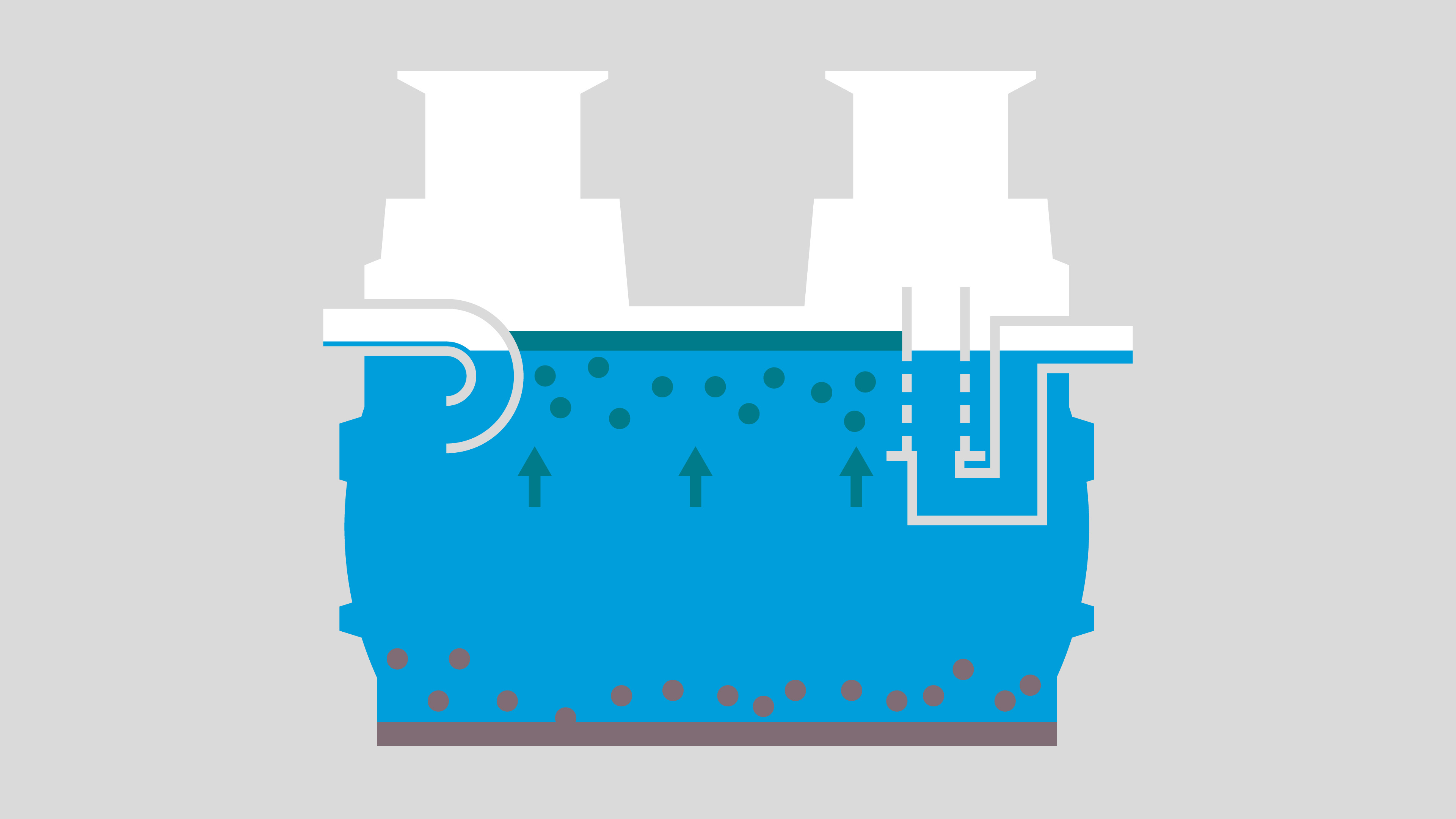
Sediment separators work on the principle of gravity: due to the difference in density between water and sediment, the materials separate naturally within the separation tank.
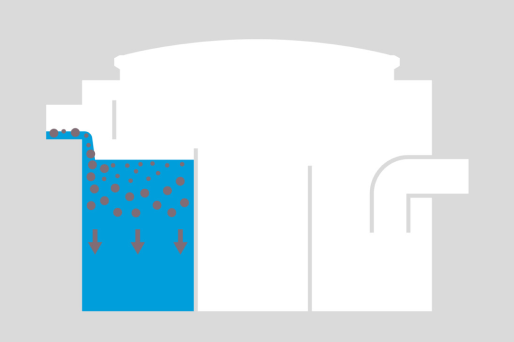
Wastewater discharge
The contaminated wastewater is fed into the sediment separator, where the flow is largely stabilised.
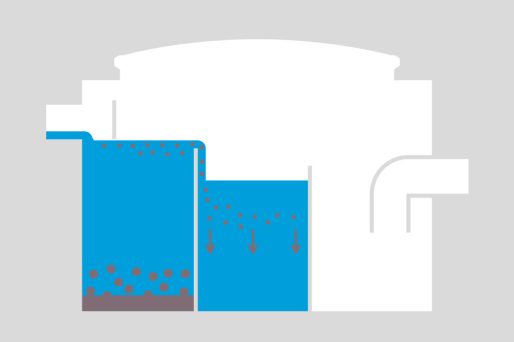
sludge build-up
In a settling tank, substances that are heavier than water sink to the bottom and settle there.
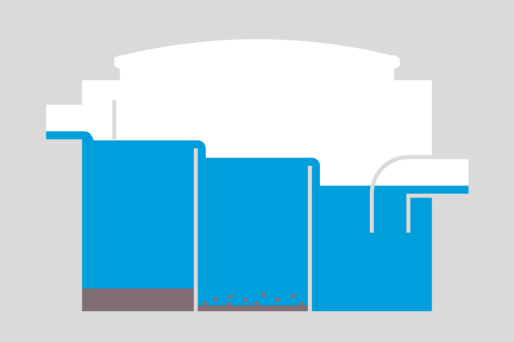
Repeat
If the separator has several chambers, the water flows into the next chamber, where it is separated from the sediment once again.

Why you need a sediment separator
You must use a sediment separator if your wastewater contains large quantities of soil, sand and/or sludge. This applies, for example, if you dispose of plaster waste via the drainage system of your surgical, orthopaedic or dental practice, or if you run a school where clay is used in craft lessons. If you do not treat your wastewater in such cases, damage to drainage fixtures and blockages are likely to occur.