How does starch end up in the wastewater, and why is that a problem?
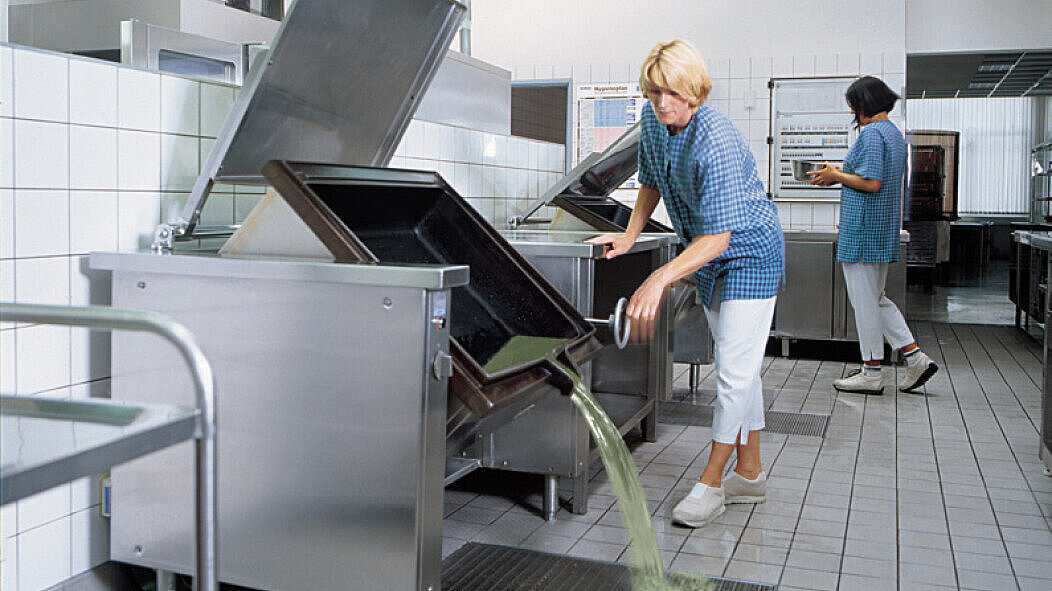
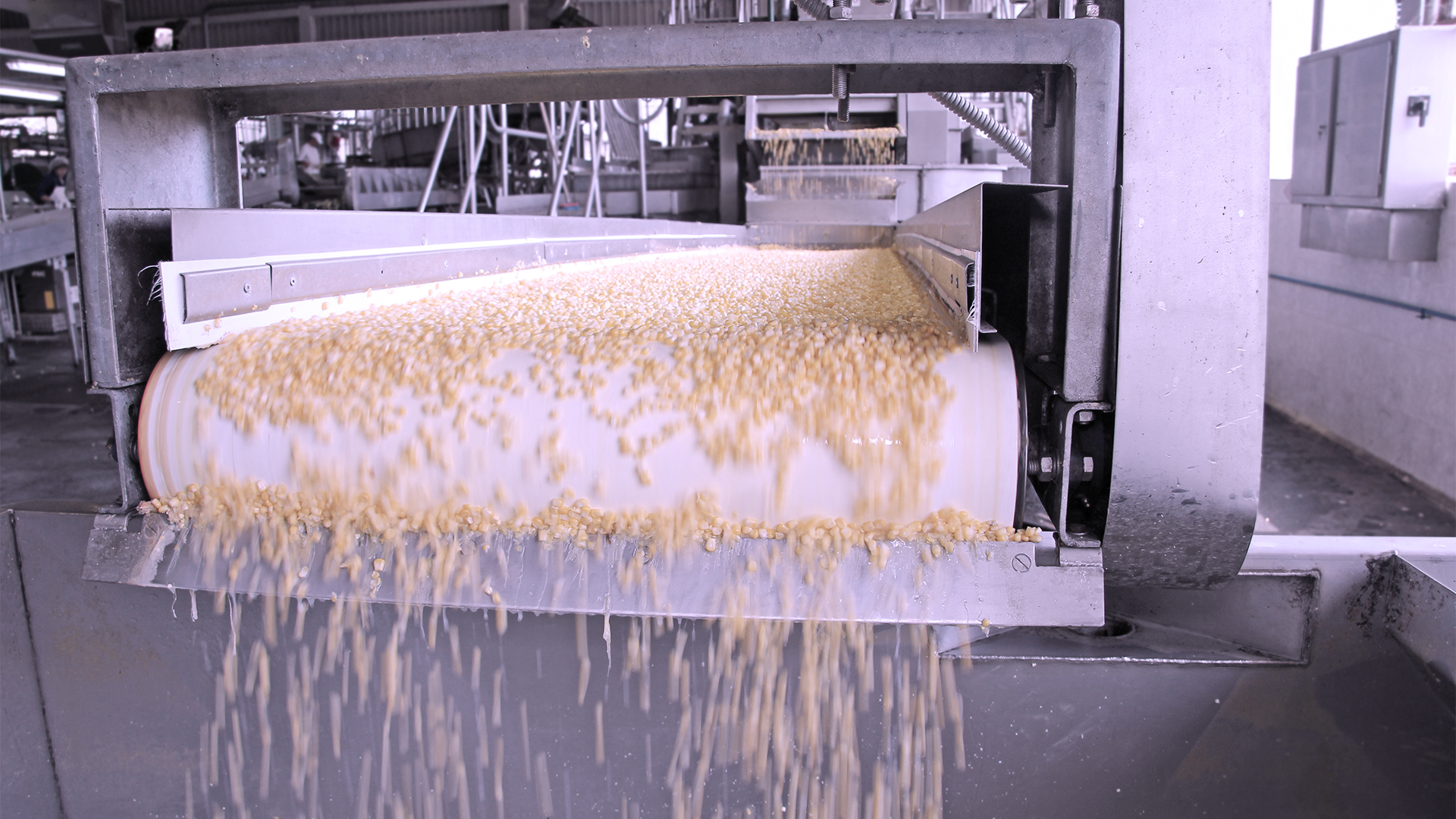
Starch is a plant-based reserve substance that belongs to the sugar family. It is found, amongst other things, in cereal crops, pulses, potatoes and rice, which store it in their cells in the form of tiny granules. When the plants are peeled or crushed, for example, the cells are torn open and the starch they contain escapes. Consequently, wastewater from food processing plants is often heavily contaminated with starch. If the starch is not separated from the wastewater as early as possible, it settles in the drainpipes and forms a crust, eventually leading to a complete blockage.
What happens inside a starch separator?
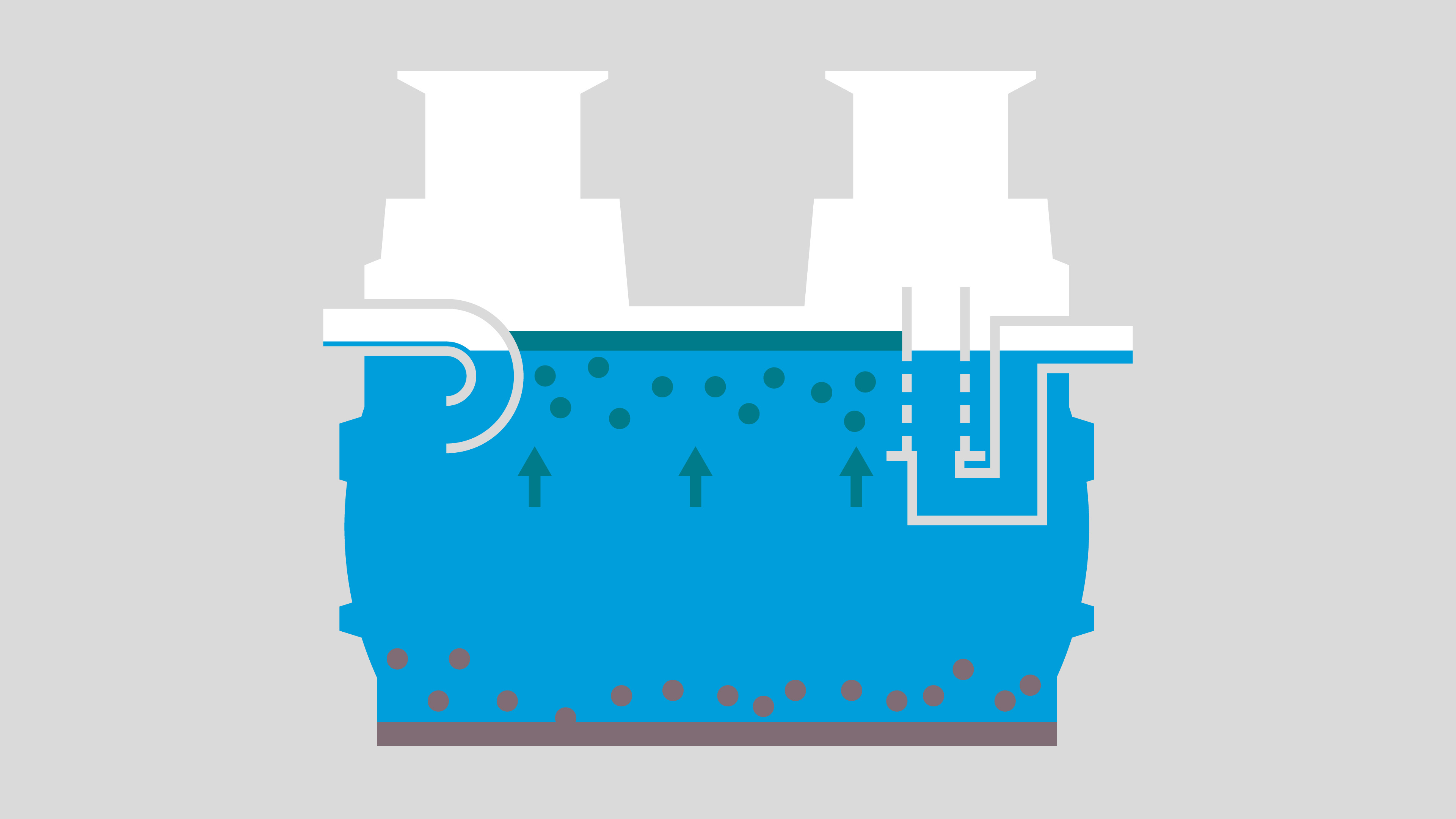
Starch separators work on the principle of gravity: due to the difference in density between water and starch, the two substances separate naturally in the separation tank.
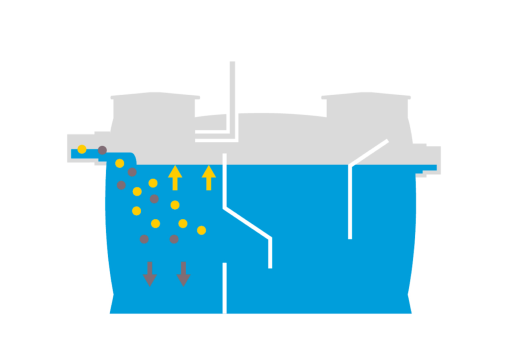
Wastewater discharge
The contaminated wastewater is fed into the starch separator, where the flow is largely stabilised due to the large volume of the tank.
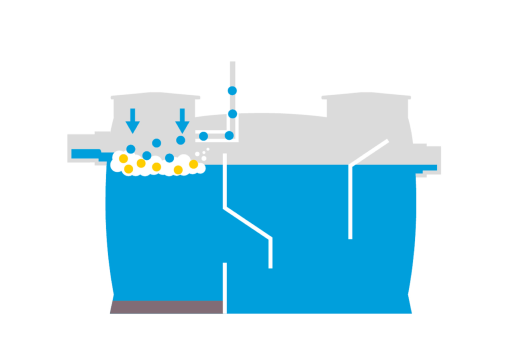
Foam formation
In the pre-chamber, some of the starch rises to the surface of the water in the form of foam. There, it is sprayed with clear water and eventually washed away.
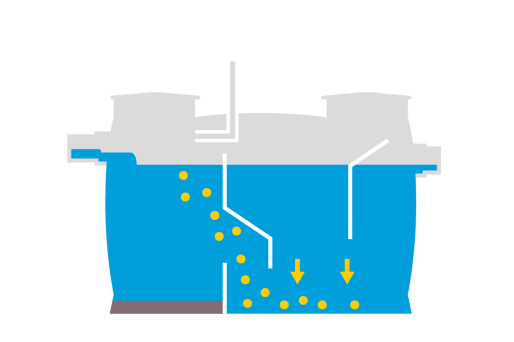
starch layer formation
In the flow-calmed tank, the starch sinks to the bottom due to its greater density compared to water and settles there.

Do you need a starch separator?
According to the regulations, you are required to use a starch separator whenever you process large quantities of starchy foodstuffs – for example, if you run a catering business, a hotel or a canning factory. If you fail to use a starch separator in such cases, you risk not only the deposits and pipe blockages described above, but also fines.