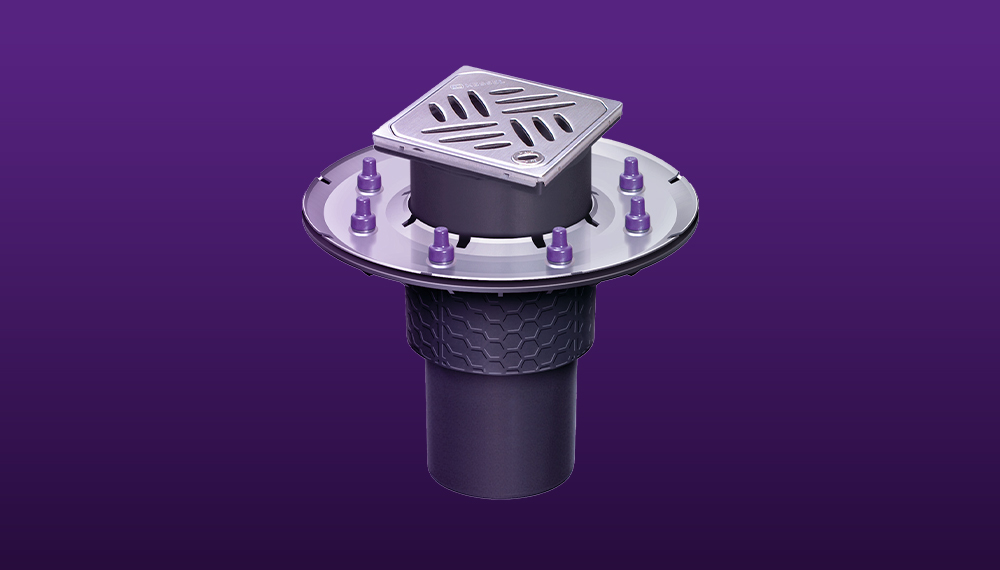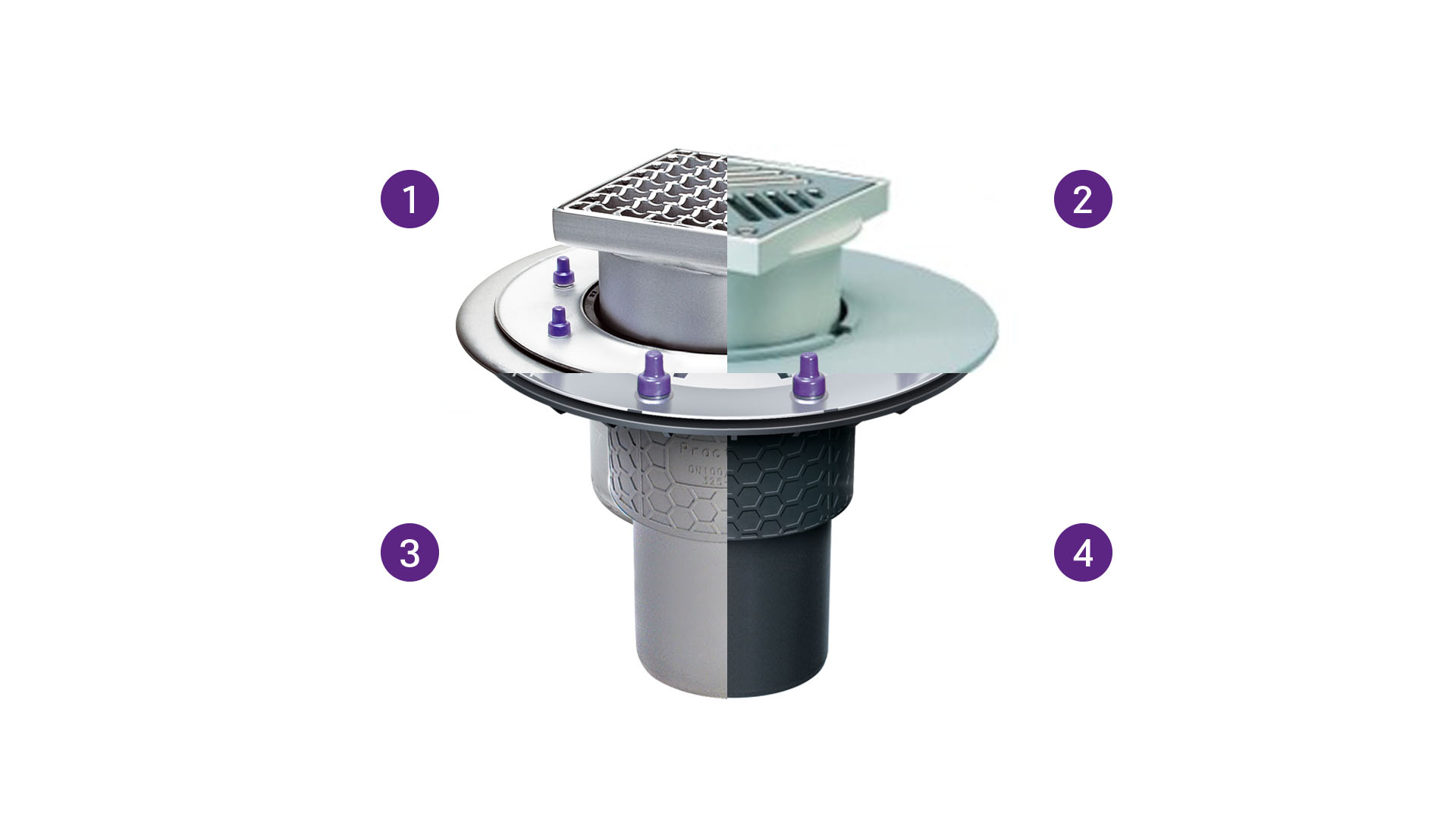
1 Stainless steel / 2 Grey cast iron / 3 polymer / 4 Ecoguss
Selection criteria for polymer and metal drains
When planning drainage systems, it is essential to determine which material is best suited to the type(s) of wastewater and the climatic conditions at the installation site. Factors to be taken into account include the substances contained in the wastewater and their concentrations, as well as the temperature of the wastewater, soil and air, and weather conditions. Find out here what stresses materials for drains must withstand, what the advantages and disadvantages of drains made from different materials are, and select a suitable material for your application using our resistance list.
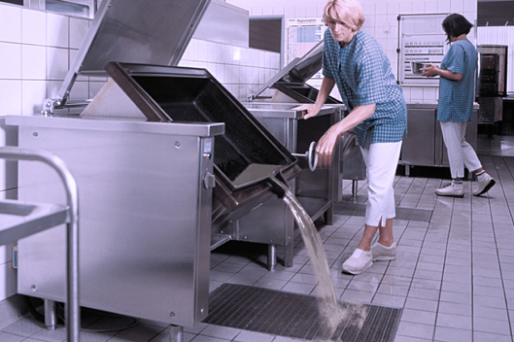
General requirements for materials used in drains
All materials used in the manufacture of drainage systems must either be inherently corrosion-resistant or be provided with suitable corrosion protection. Furthermore, they must in all cases be able to withstand domestic wastewater at temperatures of up to 95 °C. For materials exposed to industrial wastewater, the relevant specifications provided by the designer apply.
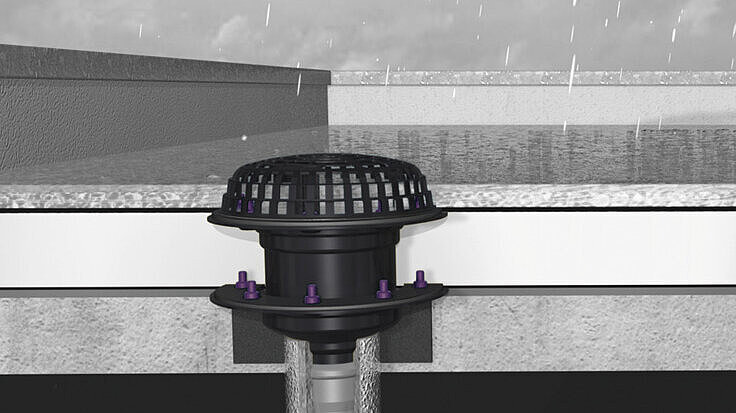
Special case: roof drains
As roof drains are exposed to the elements all year round, their materials must meet specific requirements: they must withstand rainwater and UV radiation, as well as outdoor temperatures ranging from -20 to 80 °C – or up to 220 (±5) °C if the drain is installed on a bitumen-coated roof.
Properties of conventional materials
Drainage systems are usually made from polymers or metals such as stainless steel or grey cast iron. Thanks to their respective properties, these materials are suitable for a variety of applications:
Polymer (e.g. HDPE, PP, PVC)
Easy to install and resistant to many aggressive wastewaters. A good all-rounder for standard applications such as domestic drainage in private homes and hotels. Does not require earthing or corrosion protection.
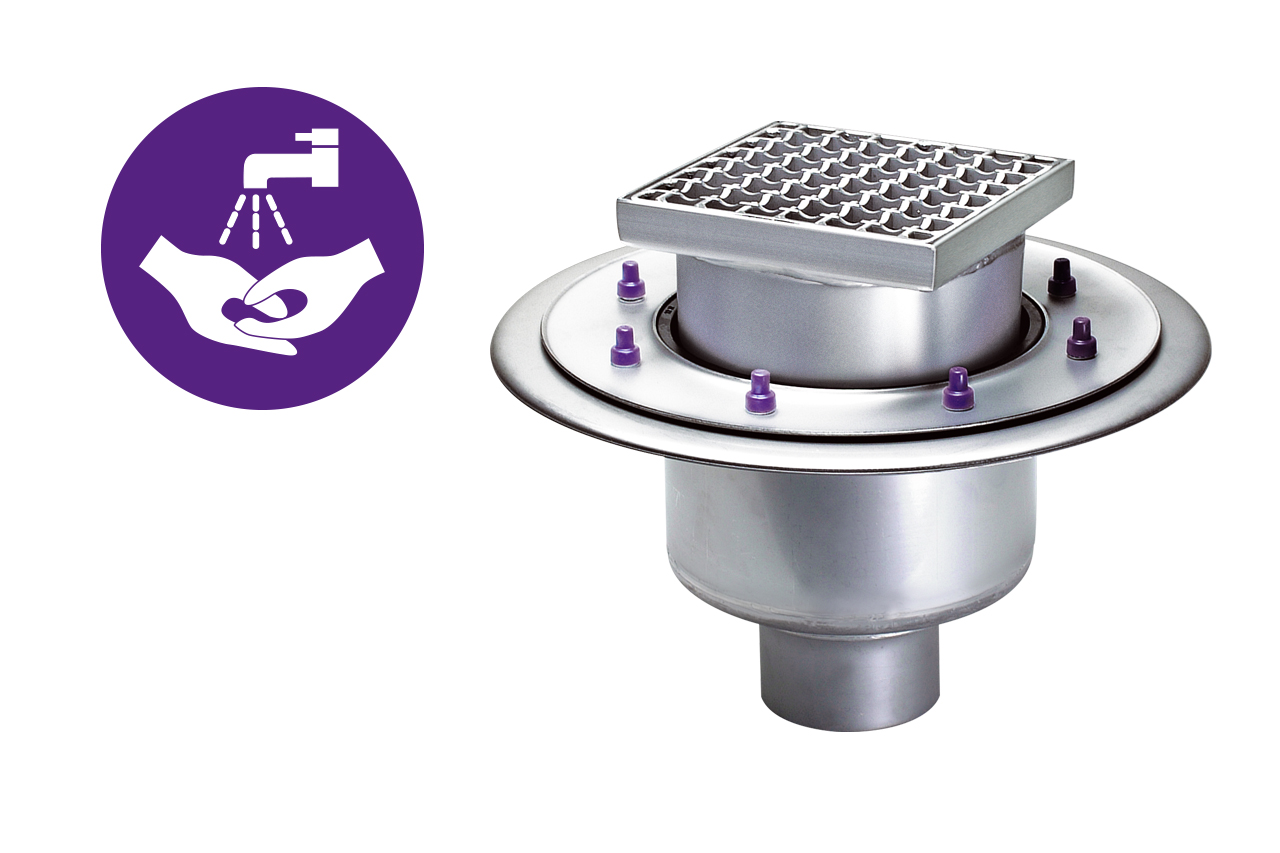
Stainless steel (e.g. 304 stainless steel, 316 stainless steel)
Particularly hygienic and therefore a good choice for heavily used environments prone to bacteria and/or germs, such as breweries, commercial kitchens, hospitals or swimming pools. Requires earthing and corrosion protection.
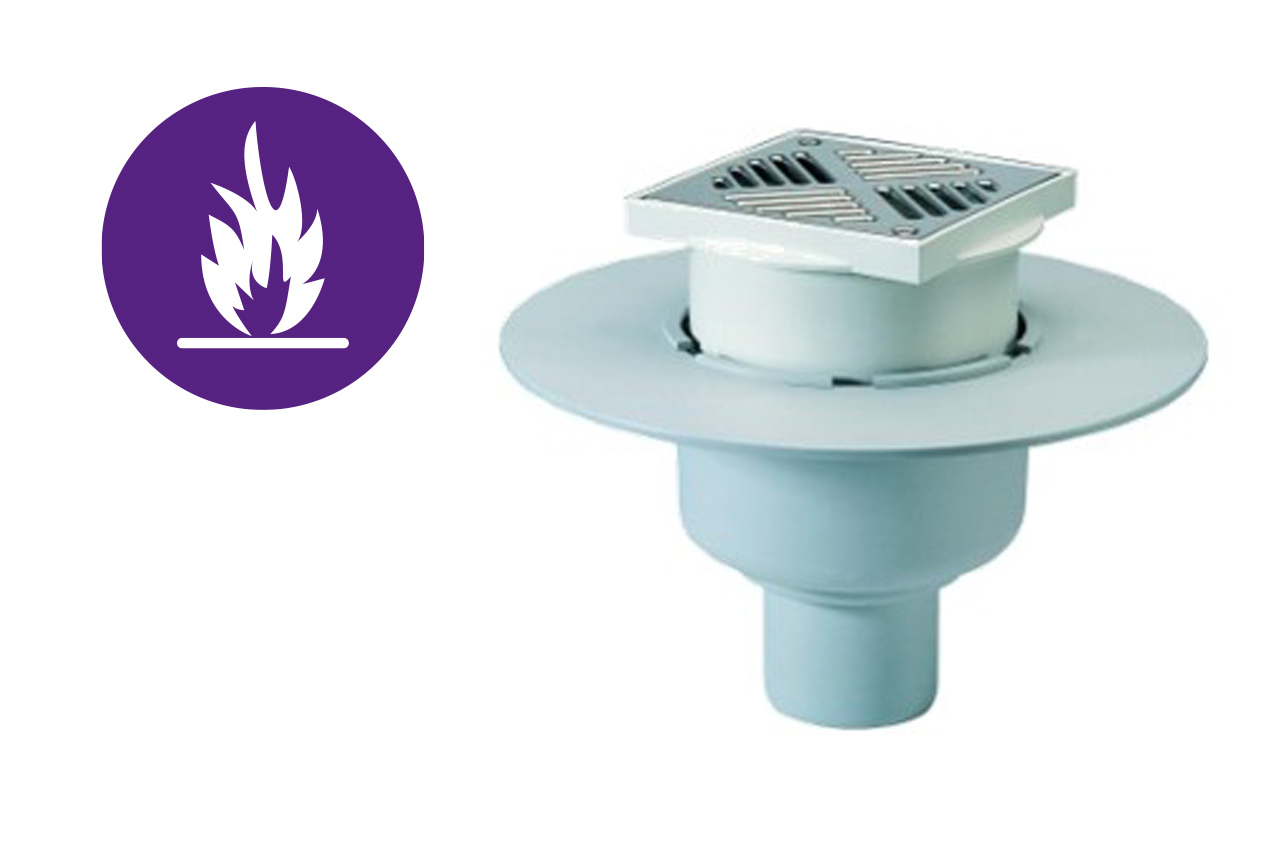
grey cast iron
Suitable for extremely hot environments such as bitumen-coated roofs due to its heat and fire resistance. Requires corrosion protection and, where necessary, earthing, and has limited hygiene properties.
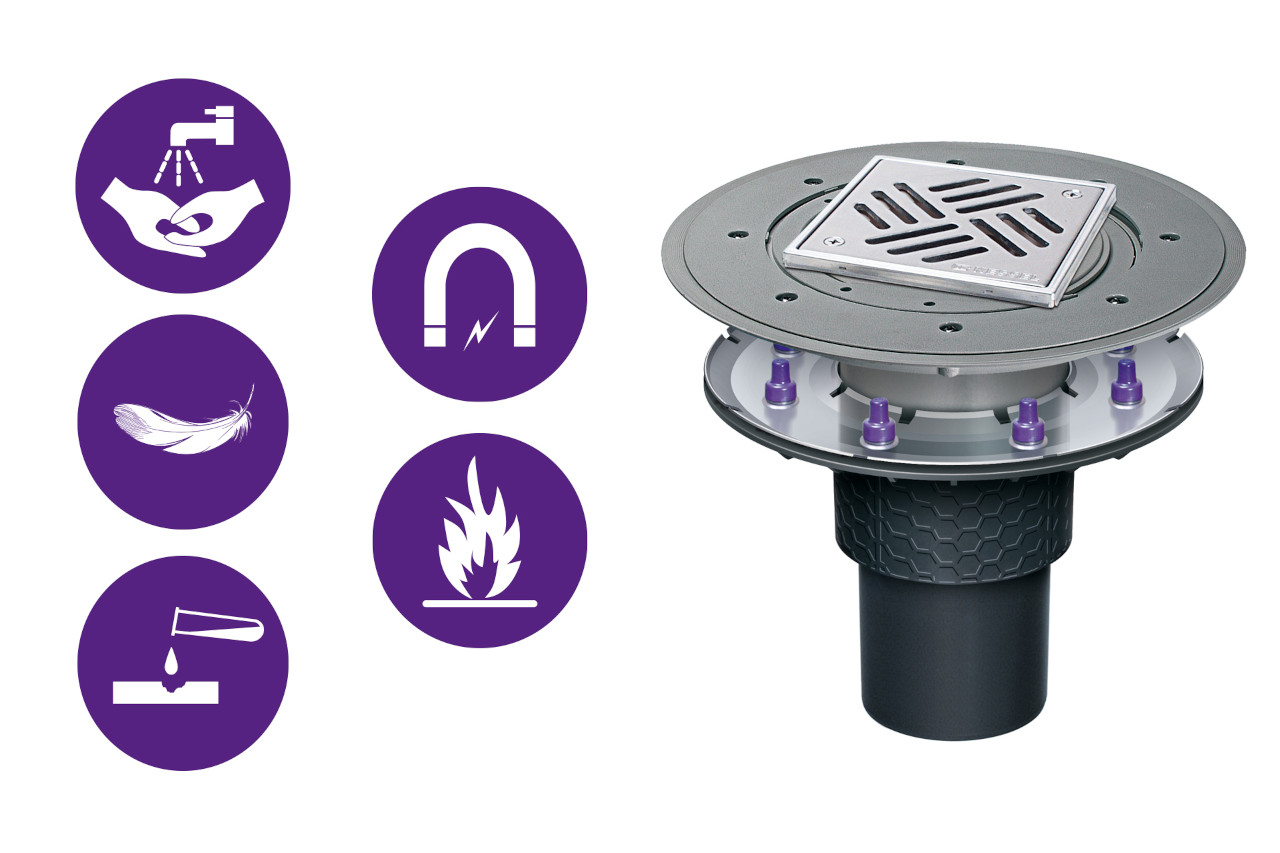
The best of three worlds: Ecoguss composite material
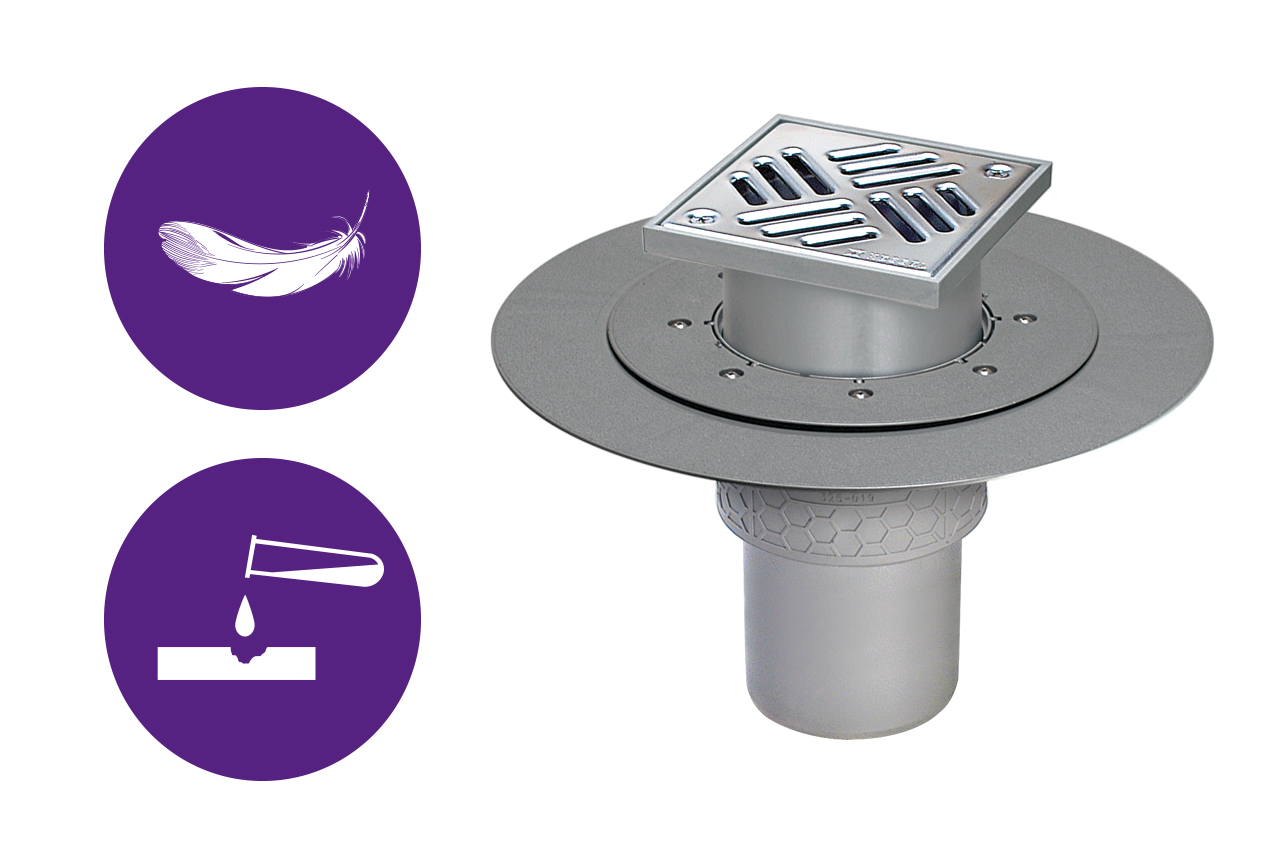
In addition to the conventional materials of grey cast iron, stainless steel and polymer, there is now a fourth alternative: Ecoguss, a high-tech composite material developed by KESSEL that combines polymer and metal components, brings together the advantages of all conventional materials. Consequently, it is non-conductive and corrosion-free, heat- and acid-resistant, and, thanks to its smooth surface, highly hygienic. Individual properties can also be specifically enhanced by adjusting the mixing ratio of the components. This means that Ecoguss drains can be installed virtually anywhere – and, thanks to their relatively low weight, more easily than stainless steel and cast iron drains – without any concerns.
Selecting materials using the KESSEL resistance list
Our resistance chart allows you to check which material is best suited to withstand the wastewater generated in your specific application. It contains a list of the most common types of wastewater, along with assessments of the various materials in terms of their resistance.