Types of rust
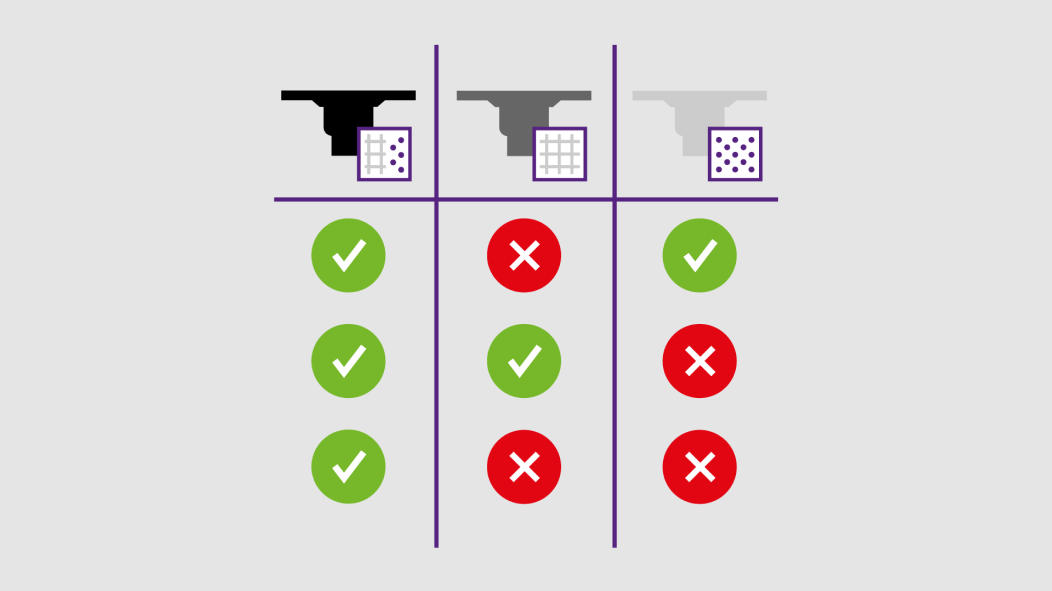
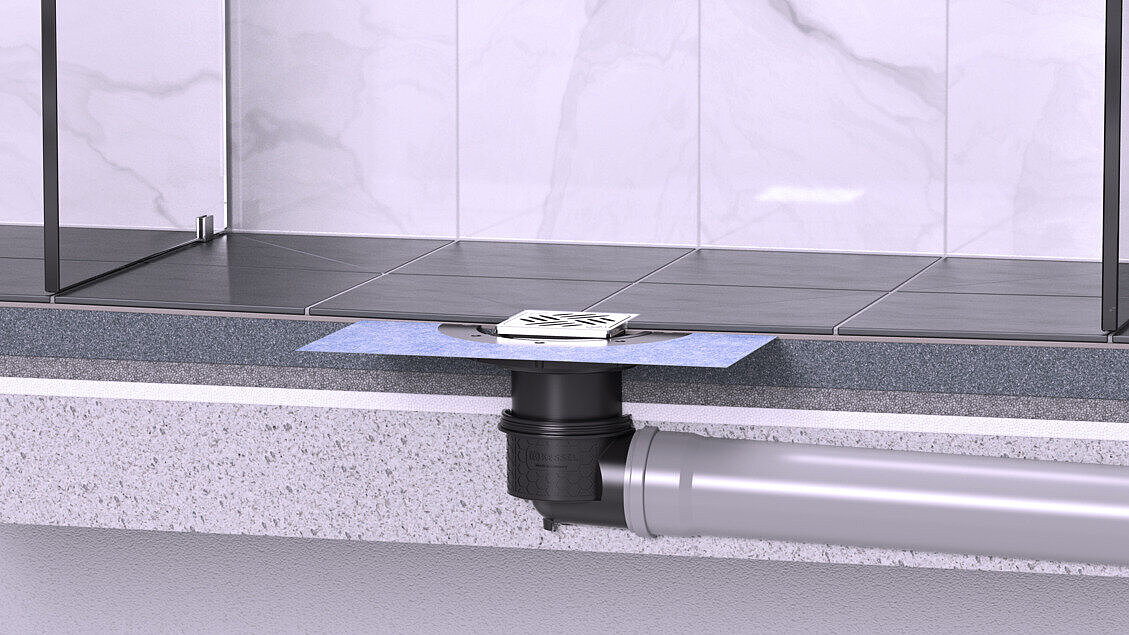
We distinguish between slotted covers and grated covers. Slotted covers are used in sanitary areas where people walk barefoot, for example. In such cases, the slot width must not exceed 8 mm. In industrial applications, slotted covers are preferred where the wastewater contains long-fibre contaminants that are to be flushed into the drainage channel or the floor structure (meat processing plants, etc.).
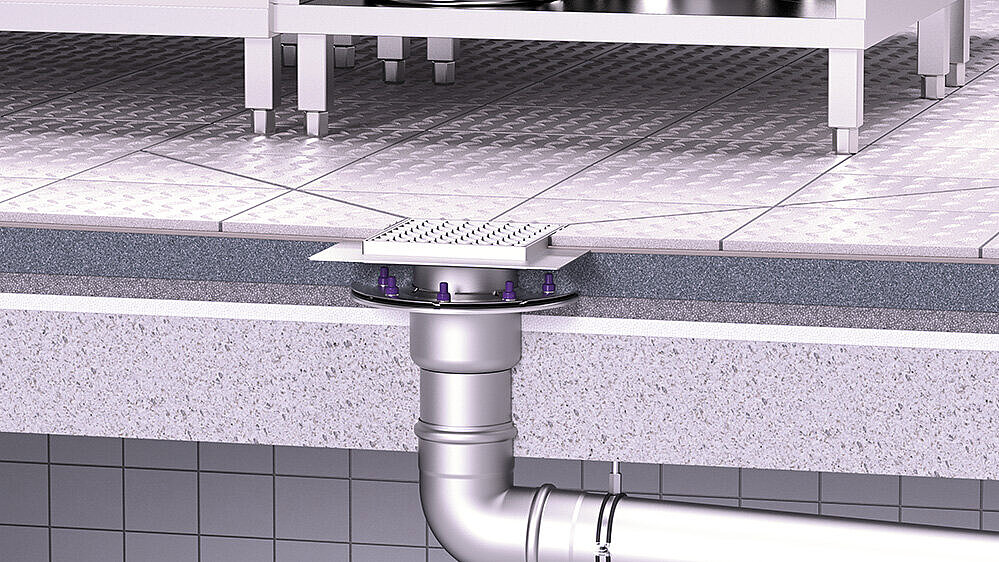
A grated cover should be used where wastewater contains short-fibre contaminants that are to be discharged directly from above into the drainage channel or floor drain. The large open cross-section of the grated cover provides no impact surface for the jet of waste water. When emptying a cooking kettle, the large volume of water is therefore absorbed by the drainage channel via the grated cover without splashing.
Grated covers are particularly suitable in areas such as commercial kitchens or similar, where hot wastewater is discharged. Waste buckets in floor drains and drainage channels are preferable where coarse materials are present. Depending on the facility’s equipment and operating procedures – e.g. grease separators with sludge traps or central screening systems – the waste bin may not be required. Hygiene officers may also prohibit the use of the waste bin in specific cases.
What does the designer need to bear in mind regarding anti-slip properties for floor drains and channels?
To prevent accidents, the designer must specify the intended area of use and identify the appropriate floor drains or channels. A distinction must be made between the general working area and the wet, barefoot area.
Work area | Example | Access | Requirement | Regulation |
| General work areas | Kitchen | With shoes | ASR A1.5* or DGUV Rule 108-003** | DIN EN 16165**** replaces DIN 51130 |
| Wet-resistant barefoot area | Shower | Barefoot | DGUV Information 207-006*** | DIN EN 16165**** replaces DIN 51097 |
Requirements
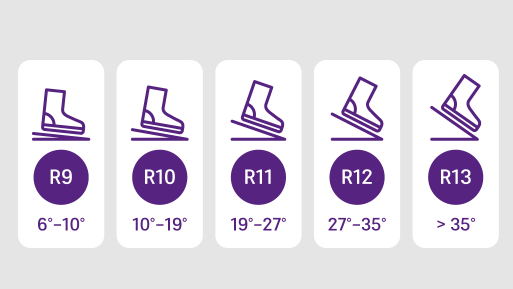
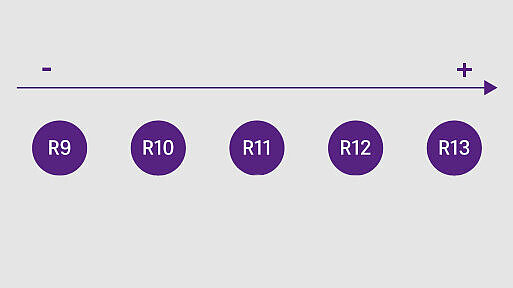
The designer must specify the anti-slip requirements. In doing so, they may refer to the TR Arbeitsstätten ASR A1.5** or DGUB Rule 108-003***. For example, the following is required:
Areas of application | R-group |
| Toilet | R 9 |
| Changing rooms and washrooms | R 10 |
| Commercial kitchens (restaurant kitchens, hotel kitchens) | R 10 |
| Kitchens for communal catering in care homes, schools, nurseries and sanatoriums | R 11 |
| Kitchens for communal catering in hospitals and clinics | R 12 |
| Slaughterhouses | R 13 |

wet area
In wet areas, however, DGUV Information 207-006 must be applied. For example, it stipulates:
| Areas of application | Assessment group |
| Barefoot walkways and sanitary areas (largely dry) | A |
| Sauna and relaxation areas (largely dry) | A |
| Shower rooms and shower areas | B |
| Pool surrounds | B |
| Ladders and steps leading into the water | C |
| Access routes to diving platforms and water slides | C |
Summary
Requirements must be defined on the basis of the designated areas of use, and the appropriate products must then be selected.
* TR Workplaces ASR A1.5: 2022 Technical Rules for Workplaces
** DGUV Rule 108-003 Floors in workrooms and work areas with a risk of slipping
*** DGUV Information 207-006 Floor coverings for wet areas where people walk barefoot
**** DIN EN 16165:2023-02 Determination of the slip resistance of floors – Test methods; German version of EN 16165:2021 replacing:
- DIN 51097: Testing of floor coverings – Determination of anti-slip properties – Wet barefoot areas
- DIN 51130: Testing of floor coverings – Determination of anti-slip properties – Workrooms and work areas with a risk of slipping
- DIN 51131: Testing of floor coverings – Determination of anti-slip properties – Method for measuring the coefficient of sliding friction, 08.2008