Overview
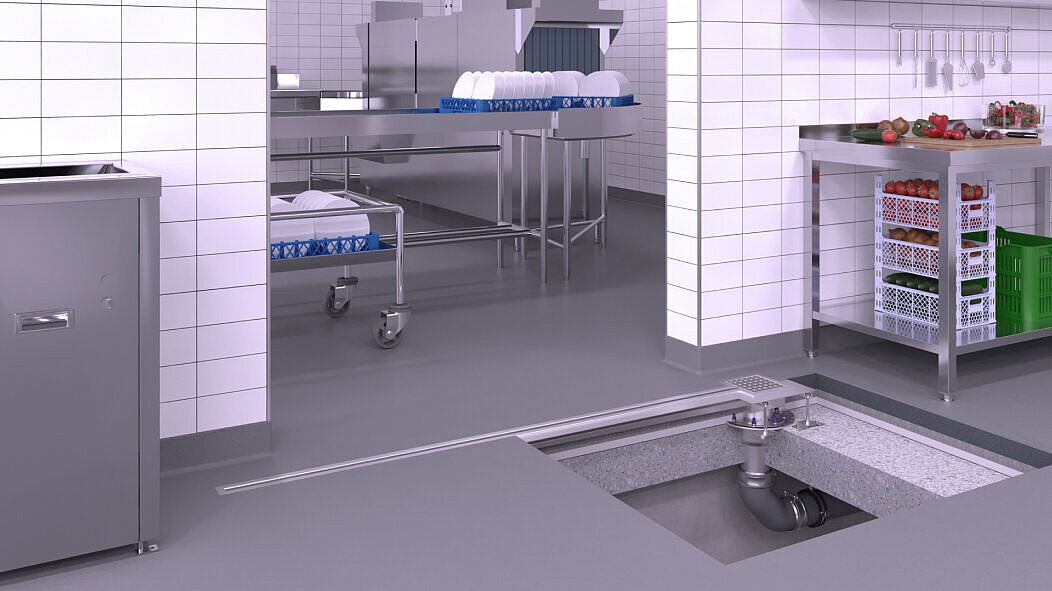
Our range of stainless steel products offers practical solutions for every application in the drainage of wet rooms, catering establishments, food processing facilities, butcher’s shops and industrial premises. A wide selection of tried-and-tested systems is available, which can be assembled and combined using our modular system. The basic components are:
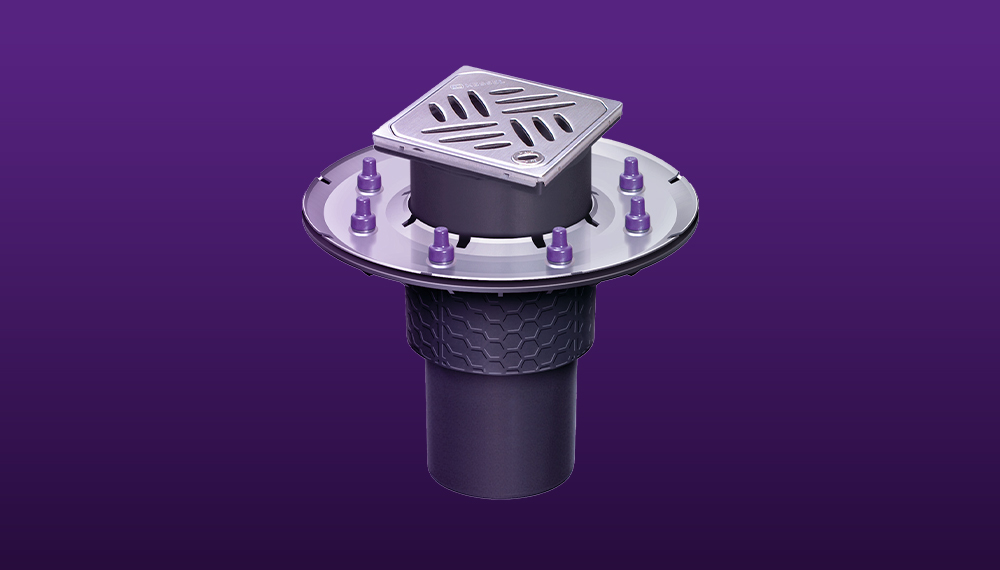
- Stainless steel floor drains
- Stainless steel floor trays
- Stainless steel box channels
- Stainless steel slotted channels
The stainless steel material used, 1.4301 (304 stainless steel) or 1.4571 (316 stainless steel), fully complies with EC regulations for food processing facilities and, together with particularly robust constructions and professional workmanship, guarantees flawless functionality. Our grating covers comply with DIN 1253-1.
Drainage channels and floor trays
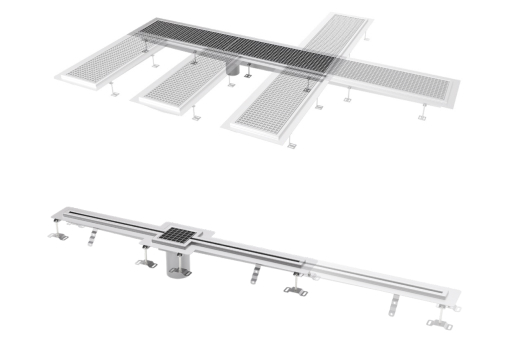
Wherever large volumes of waste water are generated and operations and workflows must not be disrupted, the waste water must be channelled to the drain via channels or floor trays and disposed of. Box channels and floor trays are suitable for large volumes of wastewater containing coarse debris (e.g. in commercial kitchens). Slotted channels are suitable for areas with lower levels of debris and where frequent traffic is expected.
Waterproofing layer for stainless steel drains, channels and trays
Surfaces in commercial kitchens are generally classified as water exposure class W2-I or W3-I, with additional chemical exposure. The version of DIN 18534 “Waterproofing layer for interior spaces” forms the basis for carrying out the waterproofing work. Against this background, it is a fundamental requirement that only substrates insensitive to moisture are used here (e.g. a cement screed on the floor and cement-based drywall panels).
Plasterboard is not permitted. For penetrations, particularly in the floor area, it is a requirement that these provide suitable flange connections for joint sealing. Channels subject to high thermal loads must be prepared in such a way that the waterproofing layer can be routed underneath them, i.e. the screed must be recessed accordingly in these areas. If a waterproofing layer in accordance with DIN 18534-2 is to be installed beneath the screed, the connection details, particularly in the wall area, must be planned appropriately.
Principles of joint sealing
- The selection of the waterproofing layer and substrates is carried out in accordance with the requirements of DIN 18534 – Waterproofing of interior spaces – dated July 2017
- The substrate must be suitable (appropriate building material, level, dry, load-bearing and free from cracks; the surface must provide good adhesion for the layers to be applied)
- All materials must be acclimatised to ambient temperatures and processing temperatures must be adhered to
- Only use approved waterproofing materials (approvals in accordance with the Ü mark, abP, ETA and/or DIN EN 12004)
- In areas subject to direct stress (such as walls in shower areas and floor-level shower surfaces), a waterproofing layer must be applied to the floor and wall surfaces
- Suitable waterproofing materials must be selected depending on the existing substrates and water exposure classes (see: DIN 18534)
- Apply the waterproofing layer without gaps in accordance with the manufacturer’s instructions (at least two coats/layers)
- Observe the minimum drying times for the individual layers
- Only floor drains with glued flanges should be used for connection to the joint sealing layer
- Waterproofing layer for movement joints / edge joints
- Use an insert made of fleece, fabric or film in such a way that planned component movements can be accommodated.
- Use only tested sealing tapes / sleeves
Flange types
When designing stainless steel drainage components, particular attention must be paid to the interface between the waterproofing layer and the floor channel or upper section. A range of flange options ensures solutions that are compatible with the interface and comply with standards for the specific floor covering being installed.
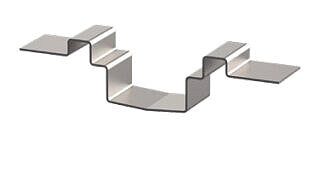
Glued flange, flange height 15 mm
For connection to waterproofing systems with slabs and tiles (in accordance with DIN 18534 with a 50 mm flange).
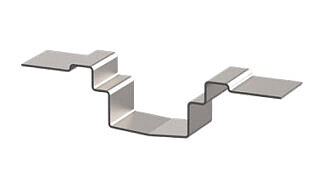
Glued flange, flange height 6 mm
For use with floor coating systems (e.g. epoxy resin).
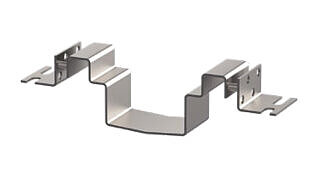
Tile connection bracket
For use where the channel is subject to thermal stress.
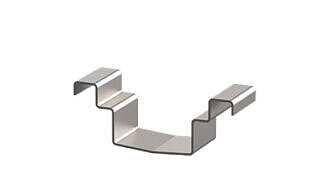
Without a flange
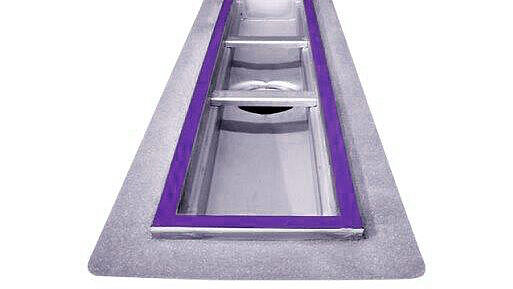
Sanding
Particularly when integrating with floor coating systems (e.g. epoxy resin), it is advisable to sandblast the flanges of stainless steel drainage channels or drains to ensure better bonding with the surrounding flooring and the substrate. Sanding significantly increases the surface roughness, thereby improving adhesion to the substrate or to the adjacent floor covering, or to the thin-bed waterproofing beneath the covering.
The coating is also resistant to salts, acids, alkalis, various solvents and many other substances. Furthermore, the coating can also be used in sensitive areas such as hospitals or food and pharmaceutical facilities.
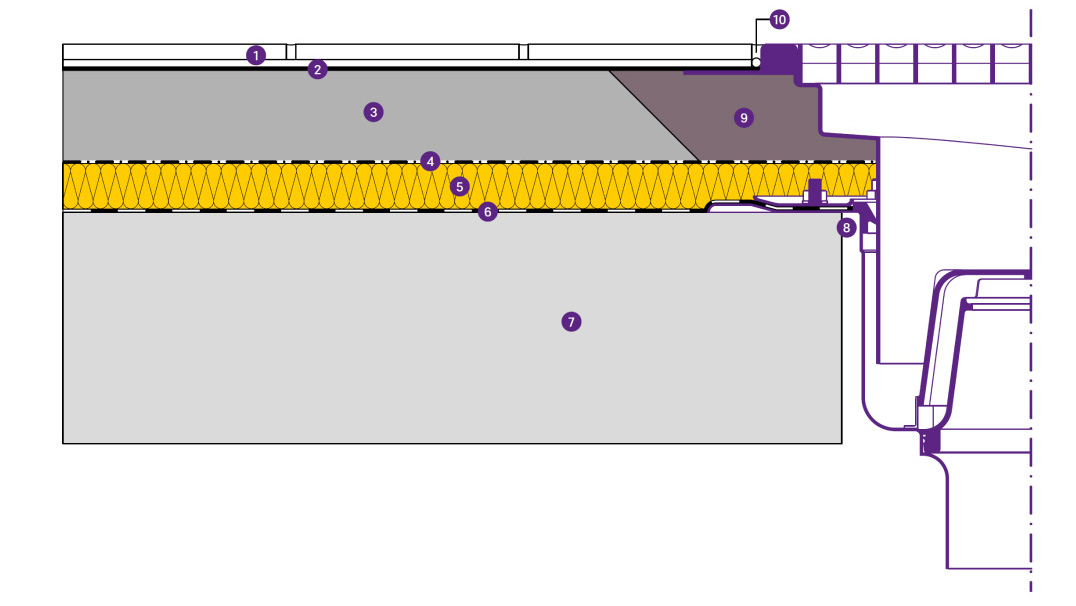
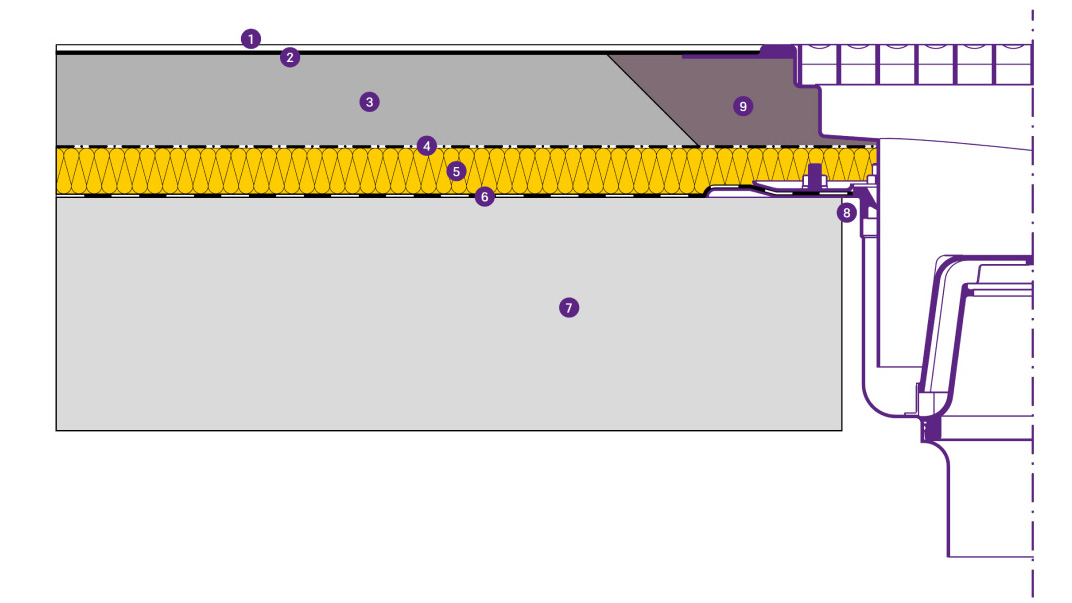
Stainless steel channel with 15 mm glued flange for tiled surfaces
1 Tiles and grouting, including tile adhesive
2 Joint sealing in accordance with DIN 18534-1
3 Cement screed
4 Separating layer
5 Insulation
6 Waterproofing membrane / Separating layer ≥ 1.5 mm in accordance with DIN 18534-2
7 Concrete
8 In the event of a breakthrough / floor structure, observe fire protection requirements
where necessary 9 Capillary-tight grouting with reaction resin
10 Joint sealant with closed-cell back-fill cord
Stainless steel channel with 6 mm glued flange for resin flooring
1 Epoxy resin coating
2 Joint sealing in accordance with DIN 18534-1
3 Screed sand
4 Separating layer
5 Insulation
6 Waterproofing membrane / separating layer ≥ 1.5 mm in accordance with DIN 18534-2
7 Concrete
8 In the event of a breach / floor structure, observe fire protection requirements
where necessary 9 Capillary-sealing grout with reaction resin
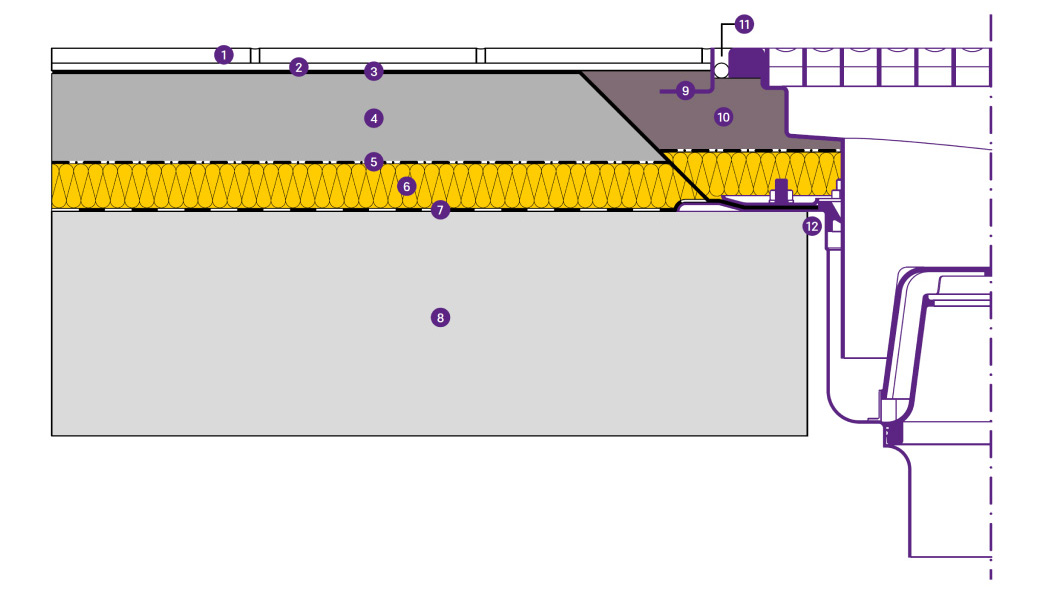
Stainless steel gutter subjected to thermal stress
1 Tiles and grout
2 Tile adhesive
3 Joint sealing in accordance with DIN 18534-1
4 Cement screed
5 Separating layer
6 Insulation
7 Waterproofing membrane / Separating layer ≥ 1.5 mm in accordance with DIN 18534-2
8 Concrete
9 Tile connection bracket
10 Capillary-tight grouting with reaction resin
11 Joint sealant with closed-cell back-filling cord
12 In the event of a penetration / floor structure, observe fire protection requirements where necessary
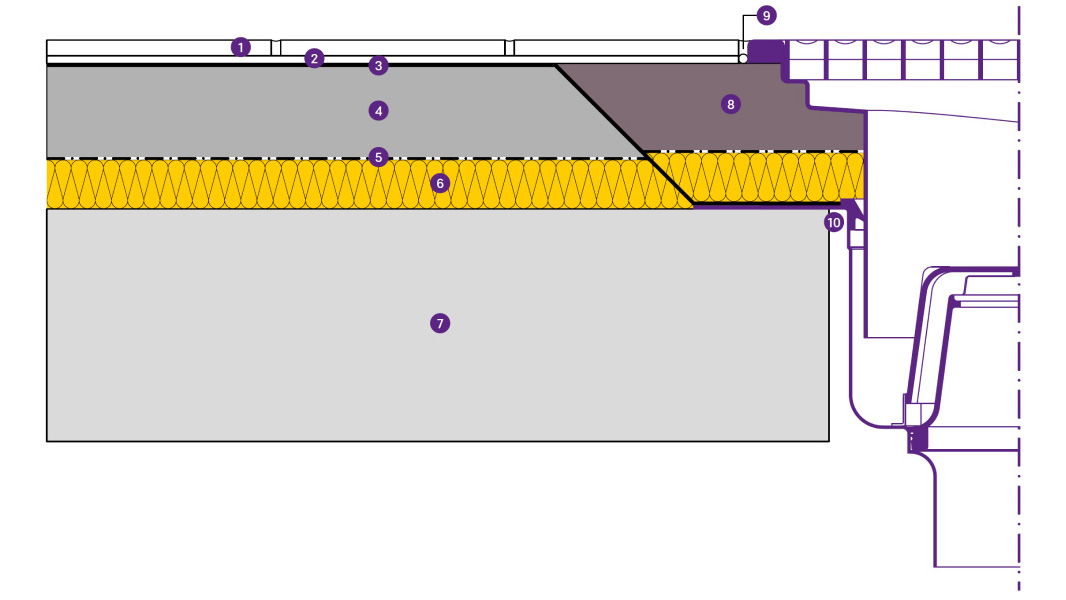
Stainless steel channel without a glued flange for tiled surfaces
1 Tiles and grout
2 Tile adhesive
3 Joint sealing in accordance with DIN 18534-1
4 Cement screed
5 Separating layer
6 Insulation
7 Concrete
8 Capillary-tight grouting with construction resin and quartz sand
9 Backfilling with an elasticised or rigid sealant depending on the requirements of the component dimensions
10 In the event of a breakthrough / floor structure, observe fire protection requirements where necessary